How Hacking Works In Our SWN VTT — A Guide for GMs and Players
How Hacking Works In Our SWN VTT — A Guide for GMs and Players
Hacking in Stars Without Number is one of the most cinematic subsystems in the game, and we've built it to feel that way in the VTT. Here's how it works.
The Hacking Flow
1. GM sets up a system Every hackable target — a starship computer, a facility network, a corporate server — is a System object in the VTT. The GM creates it with a difficulty rating (Program level 1–4), a set of locked nodes (data stores, access points, cameras), and optional countermeasures.
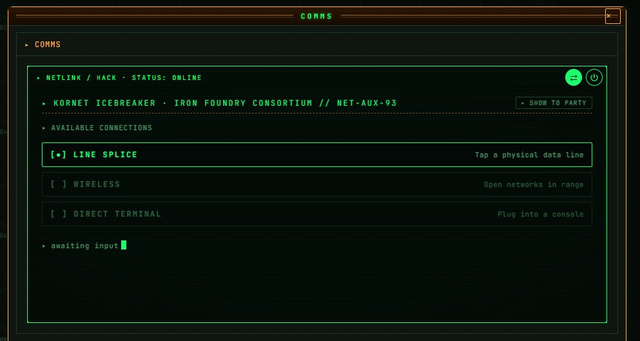
2. Player initiates an intrusion The hacker selects a target system from the comms panel and clicks Intrude. This opens the hacking interface — a visual node map of the system they're trying to penetrate.
3. Skill checks gate each node Moving through the system requires Program skill checks vs. the system's difficulty. Roll below and you fail — potentially triggering an alert or countermeasure.
4. Countermeasures fire If the GM has set countermeasures on a node, failing a check (or spending too many rounds) can trigger: - Trace: the system starts tracking the hacker's real location - Lockout: the node closes and requires a harder check to reopen - Alert: NPCs in the area are notified
5. Objectives complete or the hacker escapes Once the hacker reaches their target node, they can extract data, open a locked door, disable a turret, or plant false orders. They can then jack out cleanly — or get traced back to their body if they lingered too long.
GM Setup Tips
Keep systems small for first sessions. A 3-node system (entry → data store → exit) teaches the flow without overwhelming anyone.
Use countermeasures sparingly. One trace countermeasure on the deepest node creates tension without making hacking feel impossible.
Name your nodes. Instead of "Node 3," call it "Personnel Records" or "Security Overrides." Players get more invested when they know what they're stealing.
Player Tips
Bring a Complication skill specialist. Having a dedicated hacker with Program 2+ makes this dramatically more viable — Program 1 characters should hack only low-security targets.
Ask the GM to describe the system before you commit. The GM can give you flavor text about what you're hacking without revealing mechanical difficulty. Use that.
Time matters. You can spend extra rounds to get a bonus on a check, but every extra round increases the chance of a trace triggering. Move fast.
The Comms Tab The hacking interface lives in the Comms tab in the VTT. If you don't see the Intrude option when selecting a system, ask your GM to verify the system has hacking enabled in its settings.